Omnichannel support
Run voice, WhatsApp, and web chat from one AI support loop
Deploy the same support logic everywhere your customers reach out, then keep routing, escalations, and context unified behind the scenes.
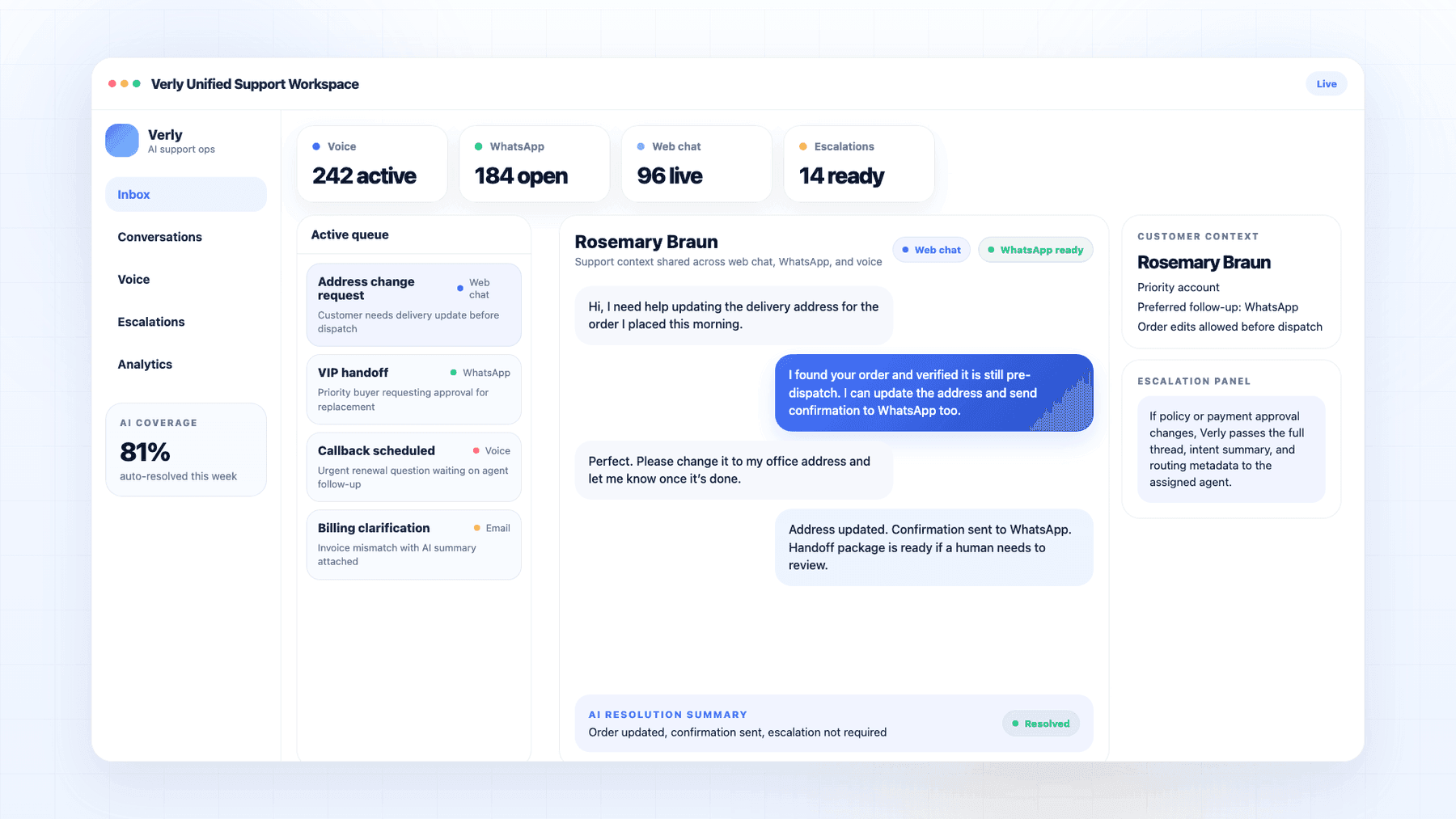
A side-by-side look at how Verly compares to the tools most teams try first — and why teams switch once their support volume outgrows a per-seat plan.
from signup to live agent
voice response latency
voice, WhatsApp, and web
Web chat
Instant answers
Voice AI
Always on coverage
Why growing teams switch
Verly is built for resolution, not just deflection. Discover why fast-growing support teams are moving away from legacy inboxes to an AI-native architecture.
Verly is built around autonomous resolution, not a human inbox with AI layered on later. That changes how fast it responds, what it can automate, and how much work your team avoids.
Built for autonomous resolution, not just reply suggestions.
Configure behavior once, then deploy the same support logic anywhere your customers reach out. Verly keeps the product brain centralized while each channel feels native.
Write once. Run across every high-intent support channel.
When AI should step back, Verly hands off the conversation with the full thread, intent, and next-step summary already attached so your team starts informed.
Humans stay in control without starting from scratch.
Verly is easy enough to launch quickly and flexible enough for teams that need APIs, actions, knowledge control, and channel-specific tuning.
Minutes to first launch, plenty of room to grow.
The value story is simple: answer more conversations instantly, keep humans focused on exceptions, and reduce the cost of every support interaction.
Better coverage and faster payback without adding headcount.
Behind the AI layer, Verly gives teams the operational control they need: analytics, observability, synced knowledge, integrations, and security-minded deployment options.
A production support platform, not a thin chatbot wrapper.
Deploy the same support logic everywhere your customers reach out, then keep routing, escalations, and context unified behind the scenes.
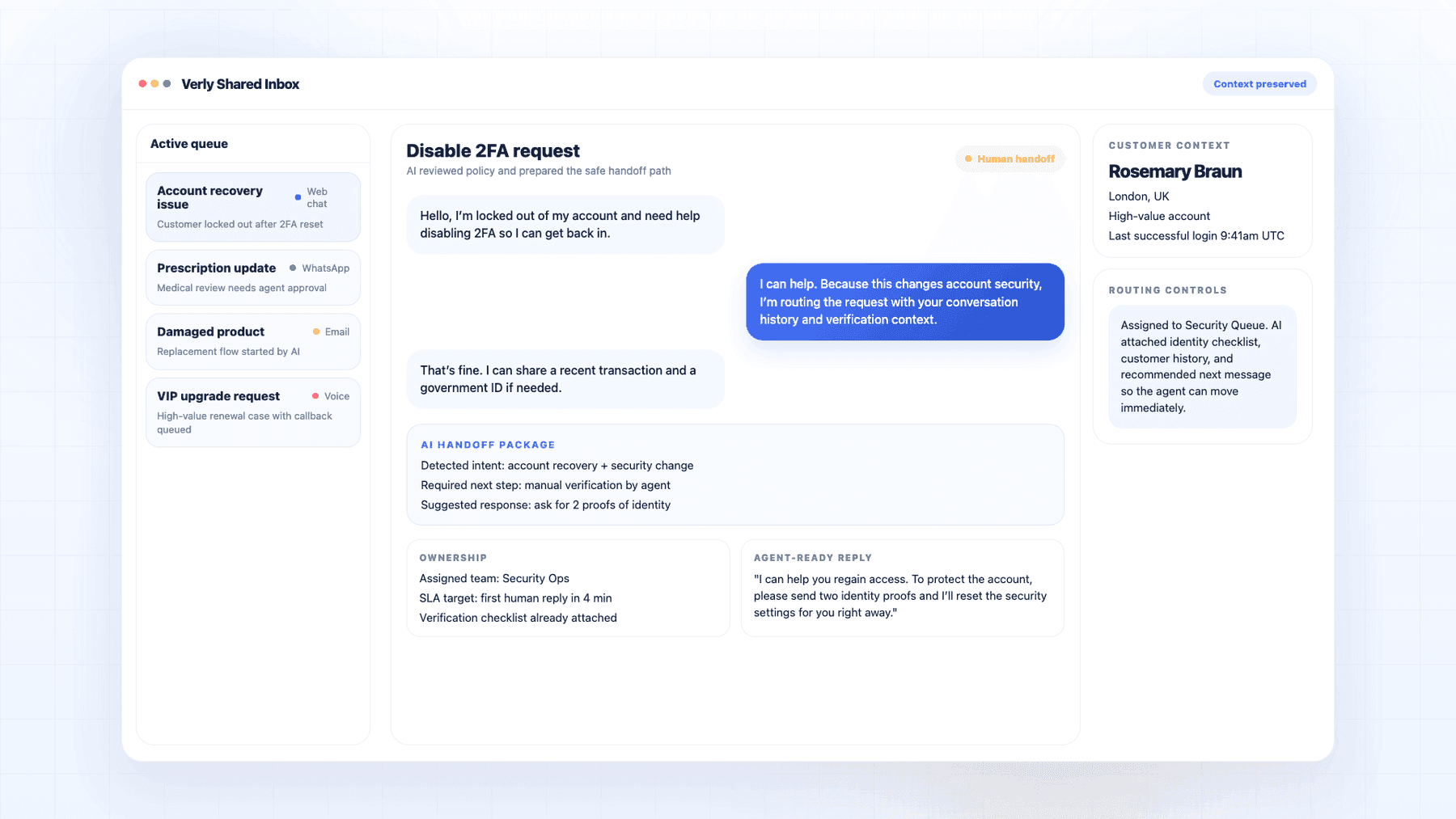
Let AI resolve the repetitive work, then route exceptions into a shared workspace your team can actually operate from.
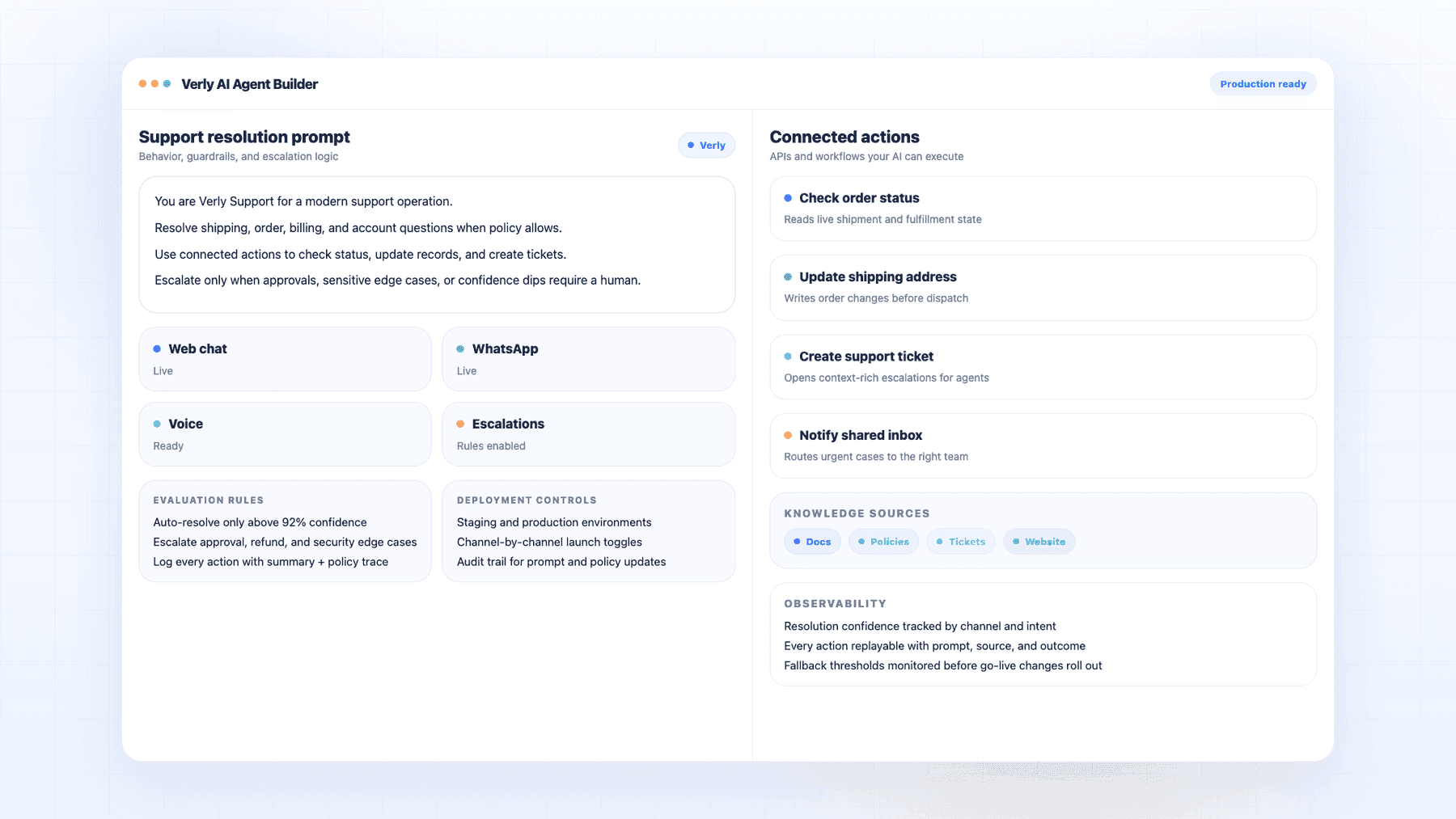
Use knowledge sync, actions, and model control to move beyond scripted bots and into real resolution workflows.
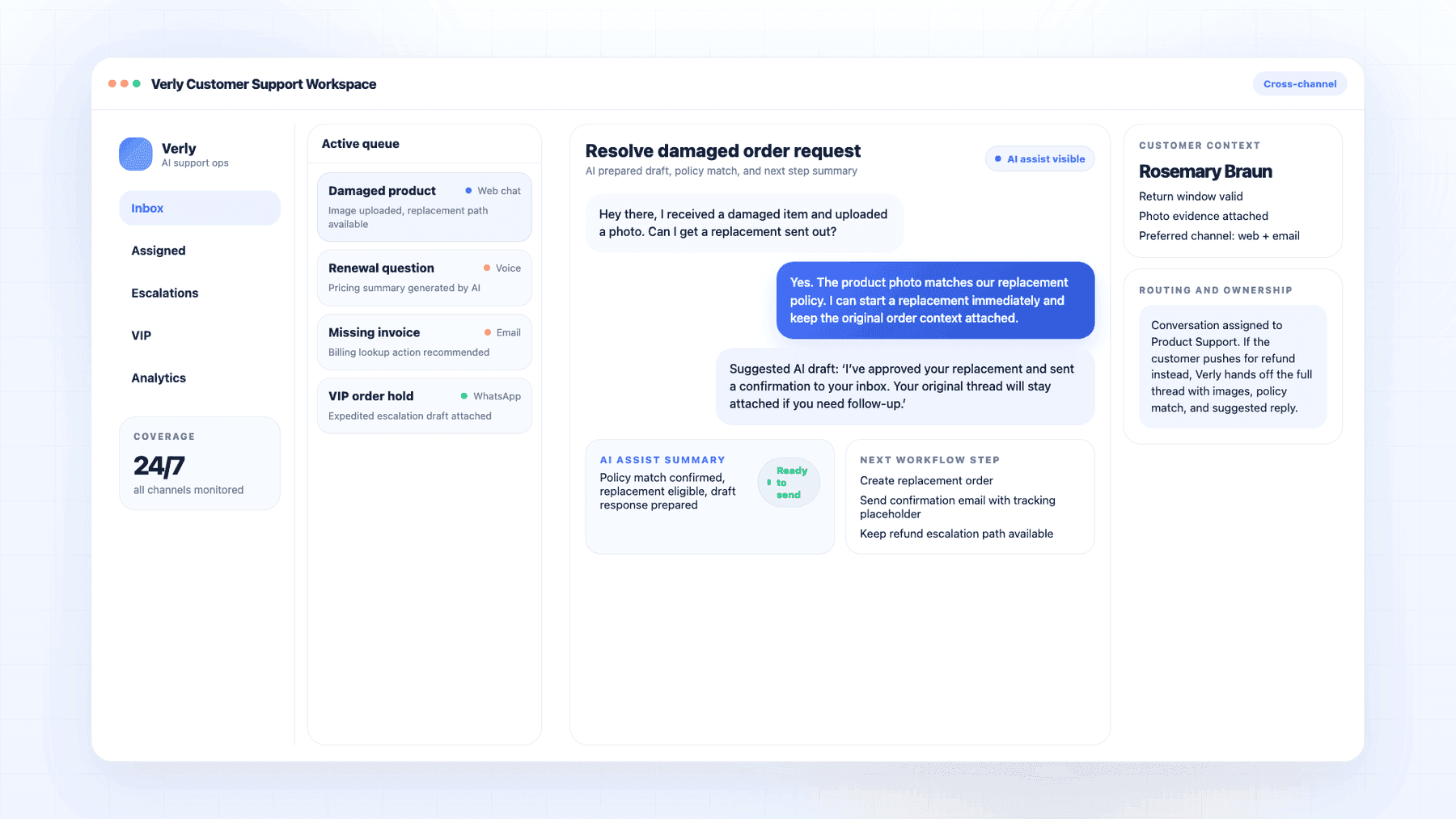
What you actually get
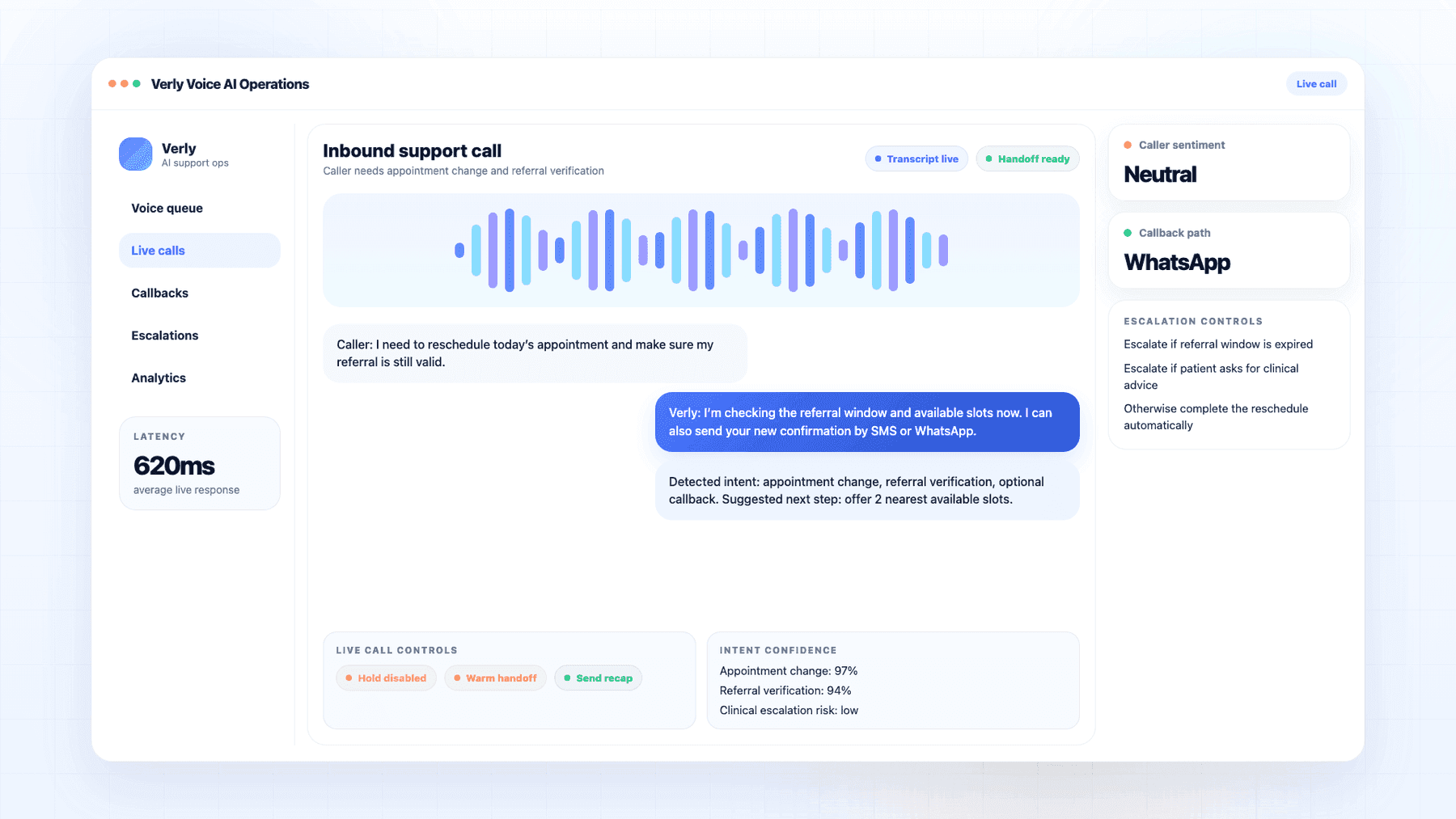
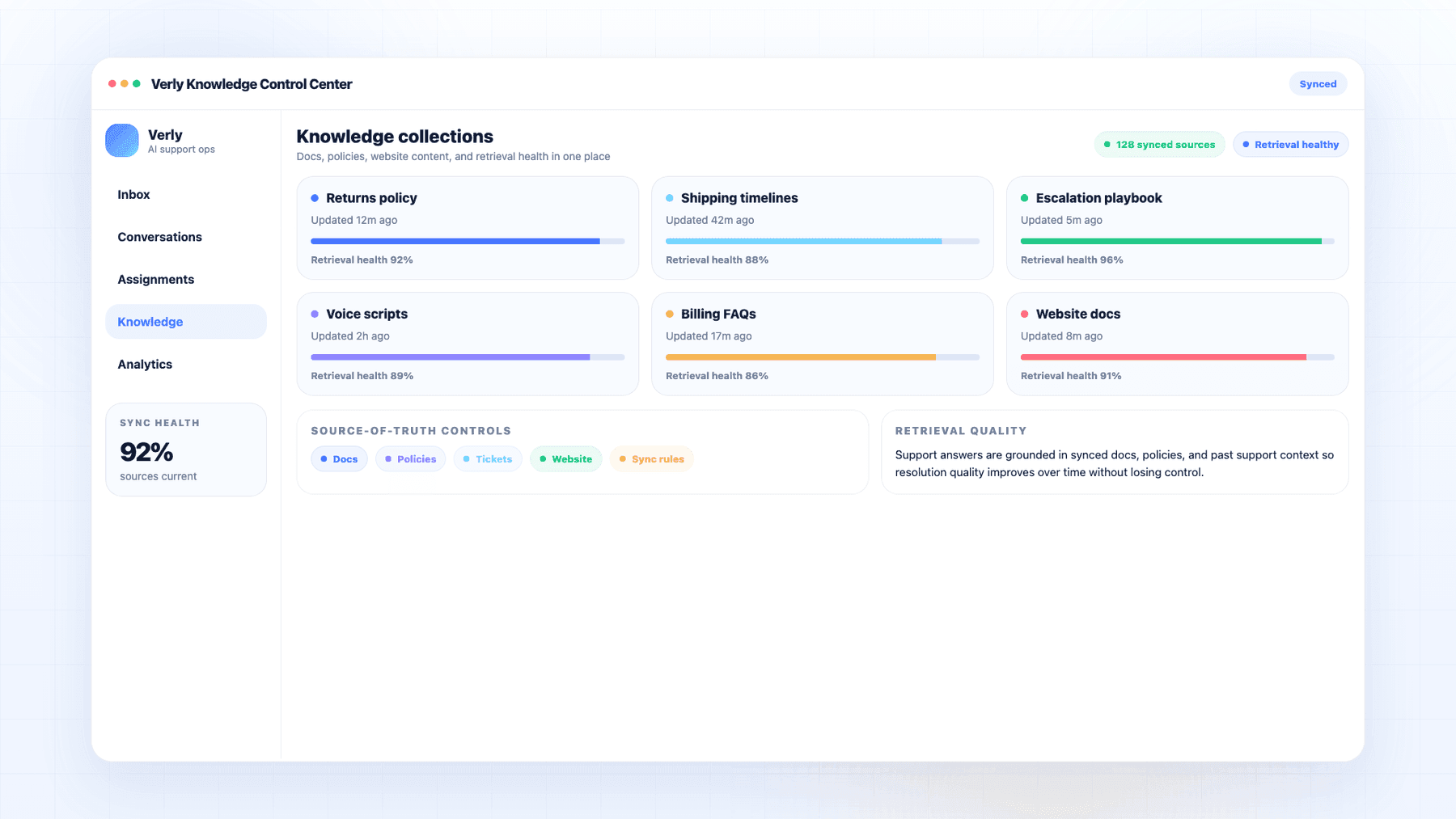
If you are evaluating Verly early, the useful question is whether the platform already gives you the right control surfaces to launch, operate, and improve support across channels. These are the product layers that matter most.
Define how the agent responds, when it escalates, what fallback path it uses, and how support-specific instructions change behavior.
Connect source material, keep knowledge updated, and shape how the system uses support context instead of relying on a static FAQ bot.
Start with one channel or expand across surfaces while keeping the same support logic, routing model, and operating context behind the scenes.
Move past simple replies with actions, API connections, routing rules, and workflows that help the agent complete real support tasks.
Configure channels, review deployment changes, and push updates with a clearer path from setup to production support.
See conversation patterns, track support outcomes, inspect logs, and improve the system from real usage instead of guesses.
Before and after
Before
A growing support team juggles separate tools for chat, voice, and escalation while customers wait for handoffs and after-hours coverage disappears.
After Verly
With Verly, the same support logic covers web, voice, and WhatsApp, resolves common requests automatically, and routes edge cases into one context-rich workflow.
Early-stage advantage
Early teams are not buying a fixed template. They get a tighter feedback loop with the product team and more influence over how support flows, channels, and controls evolve.
What success looks like first
The best early rollout is usually one high-volume flow, one strong handoff path, and one channel expansion plan, then deeper automation once the operating model is working.
Support surfaces already present in Verly
Why teams switch
Verly is a better fit for teams optimizing for automated resolution, unified channels, and lower support cost, while legacy tools remain stronger when the human inbox is the primary operating model.
Where Verly fits best
Deflect repetitive product questions, billing requests, and account issues while keeping enterprise escalations clean.
Handle order status, returns, shipping questions, and after-hours sales intent across voice and chat.
Guide appointment and intake flows with a tighter handoff path for sensitive or high-stakes conversations.
Capture every inbound lead, answer common buying questions, and route qualified prospects instantly.
Buyer questions
These are the questions buyers ask when they want to understand deployment speed, operational control, and where Verly fits into an existing support stack.
We’ll walk through your channels, your support volume, and the best starting use case so you can evaluate Verly against your current stack with clarity.
Quick walkthrough. Clear answers. A realistic starting plan for your team.